
It is estimated that a person can survive in freezing water for anywhere from 15 minutes to 2 hours, depending on a number of factors. First, the person’s body size and composition will affect how quickly they lose heat. Second, the type of clothing they are wearing will also impact how long they can survive. Third, the person’s level of activity will also play a role in how long they can last in the cold water. Finally, the water temperature itself will also be a factor.
In water that is close to freezing, the chances of survival are slim to none, with the chance of survival increasing by 15 to 45 minutes with flotation and protective gear before the brain and heart stop beating (Figure 1).
How Long Did Titanic Victims Survive In Water?
 Credit: vintag.es
The Titanic sank in 1912 after hitting an iceberg and as a result, around 1,500 people died in the accident. Of those 1,500 people, it is estimated that only around 500 actually died from drowning. The rest died from exposure to the cold water, which caused hypothermia. It is believed that the people who died from exposure to the cold water, died within minutes or hours.
There are over 1,000 people still aboard the Titanic, despite its sinking in 1912. Passengers on the Titanic only had to deal with hypothermia rather than inhalation of cold water. Almost all of those who jumped or fell into the water drowned or died within minutes because of cold shock and incapacitation. There was no actual Jack and Rose, the main characters in the 1997 movie Titanic. Of the 109 children who were aboard the Titanic, nearly half were killed when it sank. Margaret Brown, played by Kathy Bates in the film, was a real-life figure who was based on the actress.
His eight siblings were Charles Joughin, the youngest of ten children. He was a baker and was on the Titanic with his wife and two children, Millvina and John, both of whom were also working. Charles was one of the lucky ones to survive the sinking of the ship in 1912. It wasn’t until a few days later, when he was discovered clinging to a piece of wood, that he was discovered to be alive. After that, he told his story to anyone who would listen, traveling frequently to events commemorating the Titanic to do so. His plight was not publicized or recognized, and he was never accorded fame or prominence. He did not allow others to tell his story for many years, preferring to keep his story untold. His survival story, despite the odds, exemplifies human spirit, and it reminds us of the possibility of living in the present. The story of his life reminds us that we can always hope for the best.
The Titanic: 12.5% Survived Due To The Cold Water Temperature
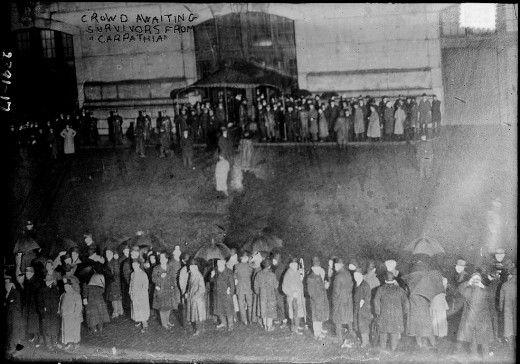
Cold shock and incapacitation caused almost all of those who jumped or fell into the water to drown or die within minutes. On 15 April, at 10:30 a.m., RMS Carpathia arrived about an hour and a half after the sinking, approximately nine and a half hours after the collision, and rescued all of the survivors. Charles Joughin, a chef on the Titanic, was by far the last person to board the ship, and after it sank into the cold waters of the North Atlantic, he survived for 3 hours before discovering a rescue boat. Only 57 people, or approximately 12.5 percent of the total number of people who survived the sinking of the Titanic, did so. This could be caused by a cold water temperature that can cause incapacitation within minutes and death within hours.
How Long Did It Take People To Freeze To Death Titanic?
 Credit: Haiku Deck
The temperature of the ocean water on the night of the Titanic’s sinking can be as high as 79 degrees Fahrenheit (F) during extended exposure, and it can be as low as 50 degrees Fahrenheit for about an hour.
By 137 hours, the Titanic will have reached its final resting place on the ocean floor. It’s easy to imagine how many emotions and nostalgia will be felt by those on board when the ship sinks. What will happen to the Titanic when it is finally buried? In any case, it’s an impressive tribute to the human spirit that so many people have come together to pay homage to this once-in-a-lifetime vessel.
The Real Cause Of Death For Titanic Victims
According to the survivors’ accounts, most of the passengers and crew died of hypothermia due to being submerged in cold water for an extended period of time.
As a result of colliding with an iceberg, the Titanic quickly sank in the cold waters of the Atlantic Ocean. The majority of the passengers and crew died of hypothermia as a result of being submerged in cold water for an extended period of time, according to a study of the survivors’ stories and evidence gathered at the time of the disaster.
Many victims died as a result of the cold quickly, and it was not until the cold had set in that they died from hypothermia. For those who survived for a longer period of time, exhaustion, dehydration, and shock were most likely the causes of their survival.
Did People Freeze In The Water When The Titanic Sank?
There is no definitive answer to this question as different people would have reacted differently in the same situation. Some people may have frozen in the water due to the extreme cold, while others may have been able to keep themselves warm enough to survive.
The Titanic was being built as an unsinkable ship, changing the way people viewed international travel. As a result, it served as a terrible reminder that nothing is impossible. Only 27 degrees Fahrenheit were recorded when the Titanic sank. Of the 1,489 passengers and crew on board, only 700 survived the Titanic sinking. Some people believe that if the rescue team had grabbed the people from the water and warmed them, there could have been more survivors. The Titanic’s lifebelts were designed to prevent drowning in the first few minutes after it sank. Edward Smith was chosen as the captain for the Titanic’s maiden voyage.
The Titanic struck an iceberg approximately 400 nautical miles south of Newfoundland, Canada, shortly before midnight on April 15, 1912. During the turn, Murdoch directed the crew to do a hard-a-starboard maneuver. It was too late for the Titanic to call for assistance, and the starboard side of the ship scraped against the iceberg, causing extensive damage. The Titanic sank on April 15, 1912, at 2:20 a.m., according to the official record. An ice field had been warned to radio operators by the bridge, but the operators failed to report it. Two researchers discovered the Titanic’s wreck on September 1, 1985, after an extensive search. When it struck an iceberg, it did not explode.
People who believed that the Titanic exploded were quick to assume that the boilers had malfunctioned. When Robert D. Ballard and Jean-Louis Michel discovered the Titanic, they discovered a perfectly preserved boiler. When the Titanic was discovered, no evidence of an explosion was discovered. Due to all the rust forming all over the remains of the Titanic, scientists believe it will become unrecognizable in the near future. In addition, removing the Titanic from 13,000 feet below sea level would be extremely expensive. In 2019, a new search for the Titanic was conducted by Caladan Oceanic, led by CEO Victor Vescovo.
On April 10, 1912, the luxury ocean liner Titanic set sail fromSouthampton, England, carrying 2,224 passengers and crew. Because of a storm, the ship was forced to turn around and return to England, where it was supposed to arrive in New York City. On April 14, 1912, the Titanic struck an iceberg and began to sink. Many theories exist as to why the Titanic sank. Scientists discovered a variety of shark species in the area of the North Atlantic Ocean where the Titanic sank. Sharks are most likely to attack the Titanic because of its food and water supply. Because the water temperature was near freezing on the night of the sinking, the sharks were likely to be at ease in close proximity to the sinking.
What Did The Water Feel Like When The Titanic Sank?
In the first stage of cold water immersion, commonly known as “cold shock,” the skin is quickly cool, causing a sensation of extreme body cooling. Charles Lightoller, the Titanic’s second officer, described how one could feel as if a thousand knives were being driven into one’s body during the sinking. gasping and hyperventilation are two common side effects.
The Titanic’s True Survivors
According to Mackenzie Wahl, a historian and author of Titanic: The Final Hours, three small dogs survived the Titanic disaster cradled in their owners’ arms as they attempted to flee to safety. It was very hot in the tank, he says, with water temperatures reaching 80 degrees Fahrenheit. There wasn’t enough time to add all of the cold, frigid air. According to Wahl, there is no truth to reports that director James Cameron told his stars not to leave the water tank for more than an hour at a time, even when they needed to use the bathroom.
Did Anyone Survive The Titanic In The Water?
Some people did survive the Titanic in the water, but not many. The water was very cold and most people didn’t have time to put on a life jacket before the ship went down.
Titanic passengers were clearly divided into two groups based on social status. Passengers were crammed into tiny cabins, forced to stand in overcrowded corridors, and treated as animals as third-class passengers. For the other first-class passengers, a variety of amenities were available, including luxury accommodations, access to the ship’s warm rooms, and even a private promenade deck. How did passengers in first class compare to those in third class on the Titanic? Emigrants were more likely to be seated in third class, which could have contributed to the increase in emigration. Emigrants comprised the vast majority of third-class passengers on the Titanic, which means they were leaving their homes to start a new life in the United States or Europe. Passengers’ social standing may have played a role in the disparity in treatment between them and other passengers. In comparison to third-class passengers, first-class passengers were more affluent and wealthy. Their wealth and status were more likely to be derived from the aristocracy or the middle class, and they may have felt superior to emigrants. Smith died when the Titanic sank, as did the rest of the Titanic’s crew. According to reports, Titanic sank and Smith was found inside the wheelhouse of the bridge, while others claim he committed suicide with a pistol. However, there is no reliable account available for it. Emigrants accounted for more than 700 of the Titanic’s more than 700 steerage passengers. There were only 25 percent of the Titanic’s third-class passengers who survived, and only a fraction of these men were men. Titanic survivor numbers 97 percent
The Titanic Tragedy: Over 1,500 Dead And 705 Survivors
Did any titanic survivors survive in the water? In one of the most amazing stories, Charles Joughin, a chef aboard the Titanic, was most likely the last person to leave the ship when it sank into the cold waters of the North Atlantic, and he survived for three hours before discovering a lifeboat. How many titanic passengers survived? At least 1,525 people were killed in the disaster, and 705 were saved.

