
In the event of a nuclear war, the main concern is not the explosion itself, but the fallout that would be produced by the explosion. Nuclear fallout is the radioactive material that is ejected into the atmosphere following a nuclear detonation. This material can travel long distances and can be inhaled or ingested, which can lead to radiation poisoning. The effects of nuclear war would depend on the size and number of nuclear weapons used, as well as the prevailing weather conditions. A large-scale nuclear war could potentially destroy the ozone layer, which would lead to increased levels of ultraviolet radiation and have devastating effects on the environment and human health. There is no guarantee that life on earth would survive a nuclear war, but it is possible that some forms of life would survive, even in a heavily contaminated environment. If a nuclear war were to occur, it would be important to have a plan in place to protect yourself and your family from the effects of nuclear fallout.
Vladimir Putin has threatened to use nuclear weapons against NATO allies in response to their military action in Ukraine. If the war spreads to NATO countries such as Estonia or Poland, a direct US-Russia confrontation would take place. Since the 1962 Cuban Missile Crisis, there has never been a greater risk of nuclear war. There are no long-term health problems caused by fallout following a nuclear war, according to survivors of Hiroshima and Nagasaki. It will also be much more serious if social collapse, famine, and the breakdown of much of the planetary biosphere occur. The impact of over 100 Hiroshima-sized detonations on India and Pakistan was examined in one study. Following a massive drop in temperature, the weather remains below freezing throughout the rest of the Northern Hemisphere summer.
In a 4,400 warhead/150 Tg soot nuclear war scenario, the majority of those who survived the initial blasts would starve over the following five years. In the years following, the mercury drops below freezing in the summer. To return anything like normal climatic conditions to the planet, it takes a long time. Even in the face of a full-scale nuclear war, there is little chance of the Homo sapiens species becoming extinct. However, the majority of the population would suffer extremely painful deaths from burns, radiation, and starvation. Survivors would survive on a devastated, barren planet. The cost of nuclear escalation is planetary suicide, with no winners at all.
Can The Earth Recover From A Nuclear War?

According to the Academy’s report, it could take three to ten years to recover, but long-term global changes cannot be ruled out. There could be a variety of negative consequences outside of the detonation zones if ozone concentrations fell significantly.
The Bulletin of Atomic Scientists has added 100 seconds to midnight to the Doomsday Clock. If the United States and Russia went to war today, tens of millions of people would die as a result of the first round of nuclear blasts. Unsafe environments have been depicted in motion pictures such as Dr. Strangelove and The Day After. According to Kristensen, a nuclear exchange would result in millions of deaths and contamination of vast areas with radioactive fallout. Kristensen: There is little chance of that occurring unless there is a disaster or an accident. If Ukraine’s sovereignty is violated, the US will not intervene. Since 1945, a growing number of intellectuals have advocated for world government as an alternative to a nuclear holocaust. Andreas Bummel: There is no country that can completely eliminate terrorism. Kristensen also proposed a few less drastic options, such as arms control agreements and crisis management agreements.
The First Month Following A Nuclear Detonation: Catastrophic Conditions And Difficult Predictions
A nuclear blast would be disastrous in the first month after it occurred. It would be extremely difficult to predict the extent and type of radioactive fallout if the temperature dropped. For nuclear war survivors, the risk of this lingering radiation hazard could be grave for up to five years after the attack. There are numerous factors that make predicting how much and how much radiation is released into the environment difficult.
What Countries Would Survive A Nuclear War?
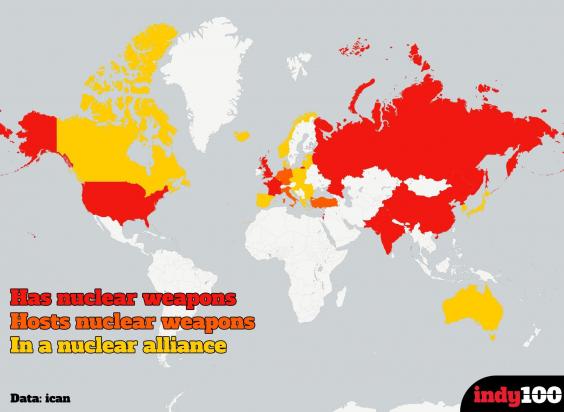
There is no definitive answer to this question as it would depend on a number of factors, including the number and location of the nuclear explosions, the prevailing weather conditions, the ability of the countries involved to field effective countermeasures, and luck. However, some experts have suggested that countries with large land masses and low population densities, such as Canada, Russia, and Australia, would be more likely to survive a nuclear war than densely populated countries with small land areas, such as Japan and the Netherlands.
Iceland, a country with isolation and low military power, is one of the safest places in the event of nuclear war. A country does not have a standing army or any other type of armed force. People who work on critical infrastructure, such as power plants or airports, would be the most vulnerable. Vivos Shelters is a company that has been in the underground shelter and city construction business for a long time. It has been widely assumed that Australia is the safest country in the event of nuclear war. Australia is unlikely to be attacked by an enemy with a large nuclear arsenal because the United States has such a powerful weapon system. A new study has revealed which countries will be most likely to survive a nuclear attack.
New Zealand’s low population and distance from major nuclear targets made it one of the top ten safest countries in the world. When it comes to nuclear war, Norway is one of Europe’s safest countries. Sweden is unlikely to be drawn into a nuclear war because of its neutrality and lack of alignment. Sweden has a large landmass and a low population density, so enemy missiles would have a much smaller range. In the event of an attack, Swedish citizens are advised to stay indoors and wait for an all-clear. Cambodia is a peaceful country, and it is one of the most secure in the world. Maldives is frequently mentioned as a possible apocalyptic event location.
If the Maldives were to experience a nuclear blast at sea level, it would be nearly impossible for it to survive. In the event of a nuclear war, the Republic ofFiji is also one of the safest countries in the world. Nepal’s nuclear safety is among the most stringent in the world. The Himalayan kingdom is located between India and China, two of the world’s most populous countries. Sri Lankans are a group of islands located off the southeastern coast of India in the Indian Ocean. Despite the fact that it is one of only a few countries to have a no-first-use policy on nuclear weapons, Japan has no plans to use them at first. The country has a small population (approximately 20 million people), limited infrastructure, and a low level of vulnerability, making it difficult for an attacker to cause widespread destruction.
According to a recent study, the Philippines ranks 20th out of 180 countries assessed as being the safest. Antarctica is located at the southernmost point on Earth, which is far away from major population centers. If there was a nuclear war, the top 20 countries would be considered safe. A country’s geographic isolation or peaceful politics can aid in its security. It is the farthest place on Earth from any other point on the planet, and reaching it in a short period of time would be extremely difficult.
Nuclear weapons have a destructive power that can destroy a large area. If you’re near a nuclear blast, the best thing to do is to get as far away as possible. In the event of a nuclear attack, the safest place to be is indoors. If you are outside, you should seek shelter in a basement or other low-lying location. If you are inside, avoid windows and high-traffic areas. In a building, find a room on the basement or lowest floor. It is best not to look out the window or on the roof. Try to find a place to gather with others outside. If you’re staying in a building, you might want to look for a room with few windows. If you’re not sure where to hide or if the nuclear explosion is closer than you think, you might want to leave.
The Best Hope For Civilization’s Survival In A Nuclear War Is In The Southern Hemisphere
Argentina and Australia are the countries with the best chance of keeping civilization alive a decade after their civilization has been destroyed, according to a new study. The Munich Security Conference conducted a study on the consequences of a nuclear war between the United States and Russia, finding that southern hemisphere countries had the best chance of survival, despite the fact that no single country would be able to successfully defend itself.
According to the authors of the study, because nuclear weapons are designed to kill humans as a whole, the effects of their use extend beyond the target country. Even countries far from the blast zone are likely to suffer as a result of the radiation and fallout.
People should seek shelter in the basement or middle of the building away from the outer walls and roofs in the event of a nuclear war, according to the authors. If they are sheltered with other people not from their household, they should also wear masks.
What Would Happen To The Earth If There Was A Nuclear War?
In the event of a nuclear war, the earth would be subject to widespread destruction. Nuclear weapons release large amounts of energy that can cause extensive damage to the environment and human populations. A nuclear war would likely result in the death of millions, if not billions, of people, as well as the destruction of much of the world’s infrastructure. The effects of a nuclear war would be felt for years, if not decades, afterwards.
Following conflict, global crop production has been estimated to have increased according to Rutgers climate scientists. If the United States and Russia went to war, the world’s food system would be wiped out. The world will be food insecure in the next two years, with over 5 billion people dying of hunger and 75% of the planet’s population facing hunger. Any nuclear attack on the United States would have a devastating effect on the global food system, killing billions of people. As a result, the ozone layer would be destroyed by heating the stratosphere, causing more ultraviolet radiation to be produced at the surface, and food supplies would be jeopardized. There is only one long-term solution to the proliferation of nuclear weapons: prohibition.
How Long Would The Earth Be Radioactive After A Nuclear War?
For nuclear war survivors, this lingering radiation hazard could pose a grave threat for up to five years after the attack. There are several factors at work in making it difficult to predict the amount and level of radiation fallout.
Delayed or global fallout refers to radioactive material that does not return to earth in 24 hours or more. Fallout, on the whole, will not pose a long-term threat to the environment, and its immediate effects will be minimal, with a time limit of less than 5 years to pose a serious threat. The main issues that could stall your readjustment are: Nuclear winter due to smoke particles remaining in the upper atmosphere for a long time, as well as ozone depletion, which destroys a large amount of ozone. Cities and industrial facilities will almost certainly be hit by a nuclear winter, as opposed to the uniform spread suggested in your question. Megacities in India and Pakistan and other developing countries are increasingly filling up with fuel, creating a lot of potential for fire. It is estimated that clouds of black soot will form in the atmosphere as a result of all of these targets colliding. A global average surface cooling of -7 C to -8 C lasts for years at a time, and it continues to cool down after a decade at -4.
Given that the global average temperature at the depth of the last ice age 18,000 years ago was -5 C, this would be the first climate change of this kind in human history that was both rapid and amplitude. The Tambora eruption in 1815 in Indonesia was the world’s largest of the past 500 years and caused global cooling to occur for about a year. If war were to break out, a significant decrease in agricultural yields would occur across the globe, potentially affecting agricultural trade. If there was a nuclear holocaust, the United States would almost certainly be unable to produce food for 4–5 years, and other countries would also be unable to do so. The sun’s spectrum at the Earth’s surface and the action spectrum for biologically damaging processes such as erythema, carcinogenesis, and photoinsufficiency are the two components of ozone. Aquatic ecosystems, such as amphibians, shrimp, fish, and phytoplankton, are harmed by a high level of UV-B radiation. According to a biological sensitivity study conducted by the University of Michigan’s Institute for Biological Studies, DNA damage from ozone depletion at 45N will be more than 200% higher.
The temperature of the ocean and the sea ice would be reduced over the course of more than 25 years as a result of thermal inertia and albedo effects. Global ozone levels have been falling since the second year following the nuclear war and are still falling 20 to 25% per year after that. As a result of ozone depletion, we estimate that aquatic ecosystems that provide more than 30% of the animal protein consumed by humans may suffer. A study of the effects of Hder et al. According to a 1995 study, if 16% of the ozone layer is lost, it could reduce phytoplankton, the marine food chain’s key crop, by 5%. It is possible that global food security will suffer greatly as a result of regional nuclear conflict, or that nuclear famine will occur as a result of regional conflict.
Nuclear Bombing Would Cause Global Nuclear Famine
The radiation level decreases to one tenth of a second after detonation, one hundredth of a second after detonation, and one thousandth of a second after detonation. Even though these lower levels may be too high to remain, it would be safer to leave your shelter and evacuate. As a result of nuclear detonation, global temperatures would plunge by approximately 13 degrees Fahrenheit in the first month following the event, which would be a significant temperature shift over the previous Ice Age. All that matters is whether or not the target is bombed. A group of nations that could include Russia, NATO, and India are also possibilities. The temperature of the ocean and sea ice would be reduced for more than 25 years as a result of thermal inertia and albedo effects. A combination of cooling and enhanced UV would put significant strains on global food supplies, potentially causing a global nuclear disaster.
How To Survive Nuclear War
There is no one answer to this question, as there is no one way to survive nuclear war. However, some tips on how to survive nuclear war include staying calm and keeping a level head, being aware of your surroundings and knowing where the nearest fallout shelter is, and having a plan in place in case of an attack.
There are horrendous consequences of nuclear weapons, but they are extremely effective and can be destroyed. Even if you are far away from the epicenter of a nuclear attack, you have a good chance of surviving one. Japanese nuclear survivors, known as hibakusha (nuclear refugees), number 127,755 as of March 31, 2021, according to the US Nuclear Regulatory Commission. This idiotic Boomer-run world currently has 15,000 nuclear weapons. They are largely controlled by the United States and Russia. The impact of dropping one nuclear bomb on Earth would result in 0.017205867% of the Earth’s habitable land being within a guaranteed-kill blast radius. If you are more than three miles away, your eyes will be seared blind in less than a minute.
It’s comforting to know that the shockwave will most likely kill you. If you have had a mild radiation dose, your symptoms may include nausea, vomiting, diarrhea, and blood loss within 24 to 48 hours. If you already urinate out within an hour of receiving the radiation, dizziness, disorientation, and low blood pressure are symptoms of radiation poisoning. 50% of the people will die from their agony within 1–30 days. Make certain that you stay indoors for at least 72 hours. One potassium iodide tablet must be taken every 24 hours. Backing up doors and windows with nails or stapled rugs or towels can be a quick and easy way to add some beauty.
If you’re stuck in a hole, pull off your outer layers and bury them under a foot of dirt. If you’re one of the fortunate few to survive a nuclear war, here’s what you should do to survive in a post-apocalyptic world. A well-stocked fallout shelter is the best thing you can do for the average person if you are moving to the countryside. The goal of peace by ensuring that our words, actions, votes, investments, and spending power are used to negotiate with dictators, despots, and nuclear weapons on Earth. Jared Brock encourages his readers to pray for shalom, prepare for fallout, and serve one another to promote peace. Russian President Vladimir Putin is unlikely to engage in war with the United States and is unlikely to initiate one. Nonetheless, I believe the human race can and will overcome global nuclear war and, as a result, thrive.

