
Knots are an essential tool for many activities, from sailing and fishing to camping and climbing. They are also an important part of tying people up for self-defense or restraining a prisoner. Knowing how to tie someone up with the right knot is a skill that can be useful in a variety of scenarios, from law enforcement to survival situations. There are many different types of knots that can be used for tying people up, including the slip knot, the figure eight, the bowline, and the half hitch. Each knot has its own advantages and disadvantages, and each is best suited for different situations. Understanding what knots are best to use in various scenarios is crucial for anyone who may be called upon to tie someone up.
By the end of the book, you will be able to tie knots in rope in a variety of ways, including diagrams of the most useful ones. Before starting, it’s a good idea to get an idea of some basic knot vocabulary. The knot illustrations below may appear intimidating at first, but once you learn the vocabulary and practice a few times, you will be able to master them. Sheet bends can be used to create a longer line or secure a critical load in a vehicle by combining two lines. Bowlines are used when you need to pull or rescue someone or tie a rope around yourself or around a tree. Clove Hitch is a good binding knot when you’re in a hurry and don’t have time to untie it.
The square or reef knot can be used to secure a rope or line around almost anything, but it is best used to connect two pieces of rope. Because of the constant pressure it withstands, this knot is ideal for tie-down situations requiring additional length.
A slip knot is required to ensure that the restraint is quickly untied. Restraints should be applied to a patient with an active violent personality in a team of five members, with one leader and one member per limb.
What’s The Strongest Knot Known To Man?

It is widely regarded as one of the strongest all-around knot combinations. It is more effective at maintaining a high breaking strength when it is tied easily rather than using a double line because of its double line. Furthermore, it can be used in monofilament, fluorocarbon, and braided lines as a versatile material.
A knot can be more powerful or weaker depending on its purpose and materials. Bowline, Figure Eight, Sheet Bend, and Clove Hitch knots are the most difficult knots to master. The material used to create a knot has a significant impact on its strength before it can be broken. Knowing and practicing your survival skills will be the difference between life and death during a survival emergency. The bowline knot is regarded as the most versatile of all knot combinations. Clove hitch is a wonder-knot found its way down from the alpines, and it is simple to tie, reliable, quick to tie, and allows you to adjust the angle. A good line should not slip out of sight quickly and easily with the Figure Eight Knot.
If you’re using a karabiner, don’t forget to re-tie the Figure 8 Knot, as it can come undone and need to be re-tied. The weaver’s knot and the sheet bend are used by sailors to connect two different ropes. A pulley is used to secure loads on a truck or trailer; the dolly knot is a compound knot that works similarly. Only a small percentage of rope knots can be used with bungee cords. It is preferable to use a Zeppelin Bend rather than a bungee cord to attach a rope. Angler’s loops are similar to the Bowline in that they are bungees. The Palomar knot is widely regarded as one of the most effective and dependable fishing knots.
Understanding how to tie a Palomar knot is required as is, as many fishermen do. Pretzels are distinguished by their shape, which is a symmetrical loop made up of long strips of dough with interlocking ends. According to stories, history, and myth, the pretzel was invented by an Italian monk.
Concluding knots are extremely effective because they are simple and secure. This is a difficult knot to untie because it can be difficult or impossible to untie after tightening, making it the ideal knot for those who require extra protection from theft. It is similar to a clove hitch in that one end is passed under the other, with an overhand knot formed as a result. Even the constrictor knot, which is one of the most popular, has been surpassed by the most recent. Scientists at the University of Manchester created the longest knot ever known to man, stretching 20 nanometers long and 192 atoms strong, as well as the most tight knot ever devised by a human. This knot is so tightly bound that it is said to be impossible to untie - a knot with no end. This new knot has already produced a level of security never before seen in the field. Despite being the world’s most tight knot for decades, the constrictor knot is more secure and reliable than ever thanks to a new knot developed by The University of Manchester. This new knot is the ideal knot for anyone who needs to keep their belongings secure while also looking to keep their possessions secure, making it the ideal knot for those who want to keep their belongings secure while also looking to keep their possessions secure.
The Strongest Knots For Every Occasion
The tie known as the “trucker’s hitch” is essential for securing heavy cargo. Roof rack tie-downs are frequently fastened with this fabric, and rope can be attached to a fixed object, such as a bumper or tailgate, during outdoor activities. The knot with the most tightly held molecules in the Guinness Book of Records may be the most tight ever made. It is the most complex woven molecule in the world, with a 192-atom loop that crosses eight times. According to data, the strongest knot for sailors is the double fisherman’s knot for lines of the same diameter and the double sheet bend for lines of varying diameter. The knots are relatively quick to tie and secure.
What Kind Of Knot Is Most Secure?
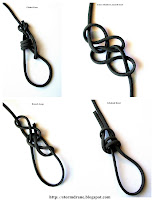
When it comes to finding the most secure knot, it really depends on the application. If you need to secure a rope, then a figure eight knot is the most secure. This type of knot is very strong and difficult to untie. If you need to tie something off to a post, you might go with a clove hitch, which is also very secure and has the advantage of being quick and easy to tie. For a rope that needs to be tied to a larger object, a bowline or anchor knot would be a good choice as they are both secure and relatively easy to tie. Ultimately, the most secure knot for any application depends on the situation, so it’s important to choose the right knot for the job.
A square knot is a simple but highly effective tool for connecting two pieces of rope. It is an efficient, dependable method that has been used for centuries and is still used today in a wide range of applications. The square knot is a versatile tool that can be used to securely tie two pieces of rope together in a way that will not slip even if the weight of the rope exceeds that of the square knot. Furthermore, the knot can be easily untied after use, making it an extremely versatile and easy-to-use product. The Arbor Knot, like the square knot, is intended for connecting fishing line to the spool or center of the reel. A noose knot is a knot in which the tighter the knot, the stronger it becomes. The Arbor Knot is a great fishing line to use to secure your line while fishing.
Secure Your Load With The Trucker’s Hitch
When it comes to securing a load, the use of a security knot is essential. When tension is applied, a security knot like the Trucker’s Hitch will stay tied and not slip or untie. This knot is commonly used by truckers to secure cargo on their trucks and trailers, as well as on roof racks for outdoor adventure tie-downs. In tests, gut, polyglycolic acid, polygl 910, and polypropylene, as well as nylon and polydioxanone, all required three throws to form a secure, snug knot. It is simple to ensure that your load remains safe and secure when using the Trucker’s Hitch.
Types Of Knot Tying
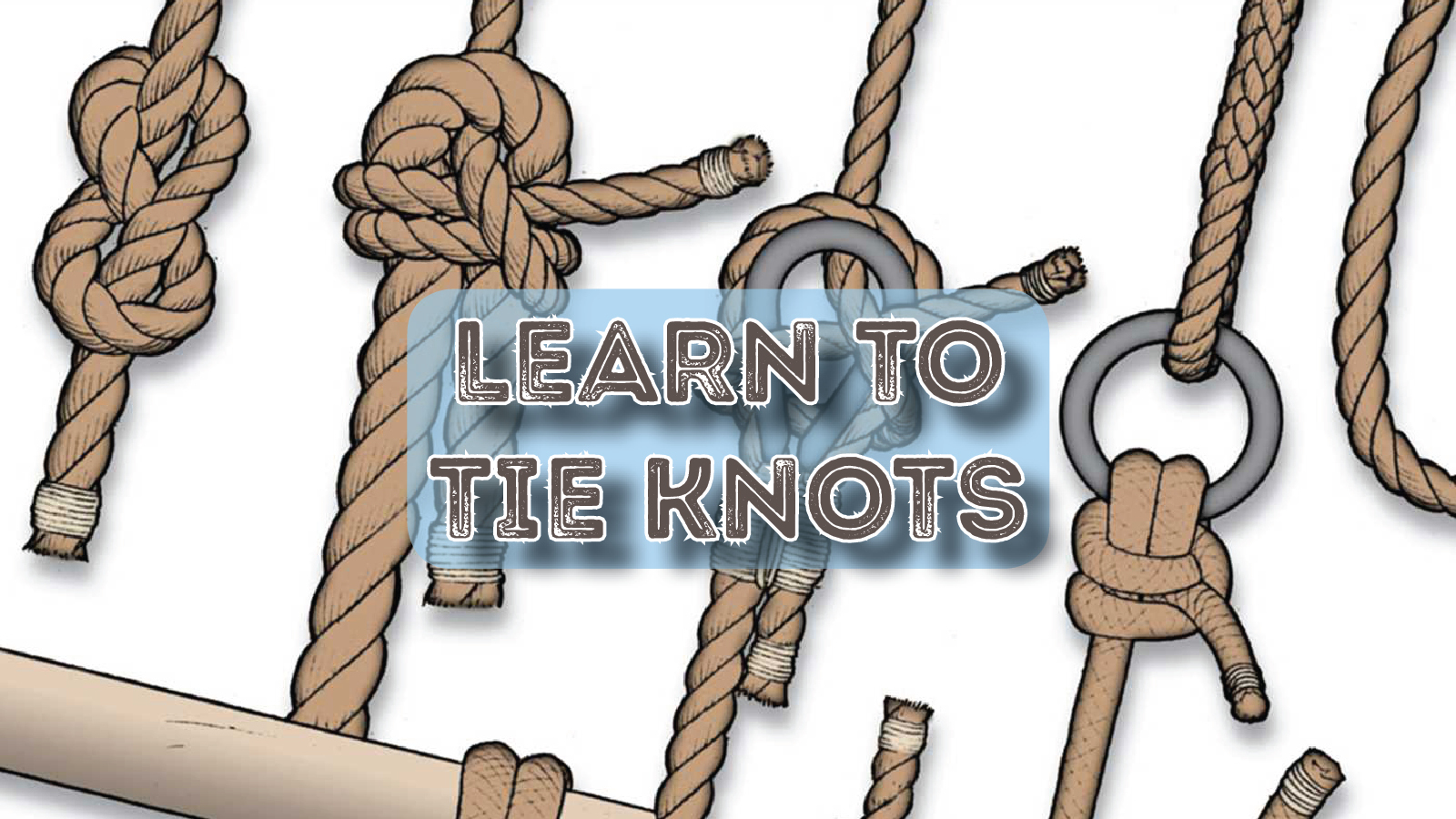
Knot tying is an incredibly useful and versatile skill that has been used by many cultures throughout history. There are a variety of different types of knots that can be used for a variety of purposes, from decorative purposes to practical uses. Common types of knots include the bowline, square knot, figure-eight knot, clove hitch, and reef knot. Each type of knot has its own unique characteristics and uses, but all of them can be used to tie rope or other materials together. Knowing how to tie these knots can be an invaluable skill, as it can be used to secure loads, join two pieces of rope together, or simply decorate an item.
Types Of Knots And Their Uses
Knots are an essential skill for anyone who sails, climbs, or camps. There are many types of knots with various uses, from the simple Square Knot, which is used to tie two lines together, to the more complex Double Fisherman’s Knot, which is used to join two ropes of different diameters. Other common knots are the Bowline, used to create a secure loop, and the Clove Hitch, used to attach a rope to an object. Knots can be used for a variety of applications, such as securing a tent, tying a bundle of objects, or lashing poles together. Knowing how to tie the right knot for a particular task is an invaluable skill to have.
It is a string, rope, or cord that is tied to the ground to hold it in place. Over time, hundreds of knots have been invented, ranging from simple knots that take less than a second to make to more complex knots that require a detailed instruction plan. The overhand knot, which is primarily used as a stopper, is the simplest knot in the world. An intricate knot has always been associated with artistic expression as well as function in human history. Knots can be useful for tying your shoes, boating, or hunting, in addition to tying your shoes (Bow Knot or Ian Knot). The most commonly used example of this is the cotton rope macramé.
What Are Different Knots Used For?
Knots can be used to tie your shoes (bow knot or an Ian knot), tie your boat bow (bowline knot), tie your hunting or camping clothes, and tie the knot on a boat or pole. Macramé, the most well-known example of this, is used in all types of art and crafting.
The Unbeatable Strength Of The Constrictor Knot
Concomitant knots are regarded as one of the most difficult and dependable binding knots in the world. The knot is especially useful when two pieces of wood are attached together with a rope, such as when pulling the rope tightly. Tie two ropes together with this material because it is impossible to slip or come undone even in the strongest of conditions. Furthermore, a constrictor knot can be used to bind a bandage around a limb, and even if yanked, twisted, or moved, the bandage will not come undone. The strength of this knot is due to the fact that it is a harsh knot, which causes it to become tighter as it is yanked in various directions. Because it is nearly impossible to untie when it is pulled tightly, it is frequently used for secure binding. The knot is a powerful one due to its simplicity and durability in the face of extreme forces, making it an excellent choice for situations where reliability and strength are required.
How To Tie Hands With A Tie
Tying hands with a tie is actually quite easy. First, you’ll need a tie that is long enough to go around your wrists. Then, you will want to hold both ends of the tie in one hand and then wrap the tie around your wrists. Once you have done that, you will want to hold the ends of the tie in your other hand and bring them over and around the back of your wrists. Now, you can tie a knot at the top of your wrists, making sure it is secure. Finally, you can use the excess fabric to make a bow, or you can simply tie the ends together in a knot. With that, your hands will be securely tied together with a tie.

