
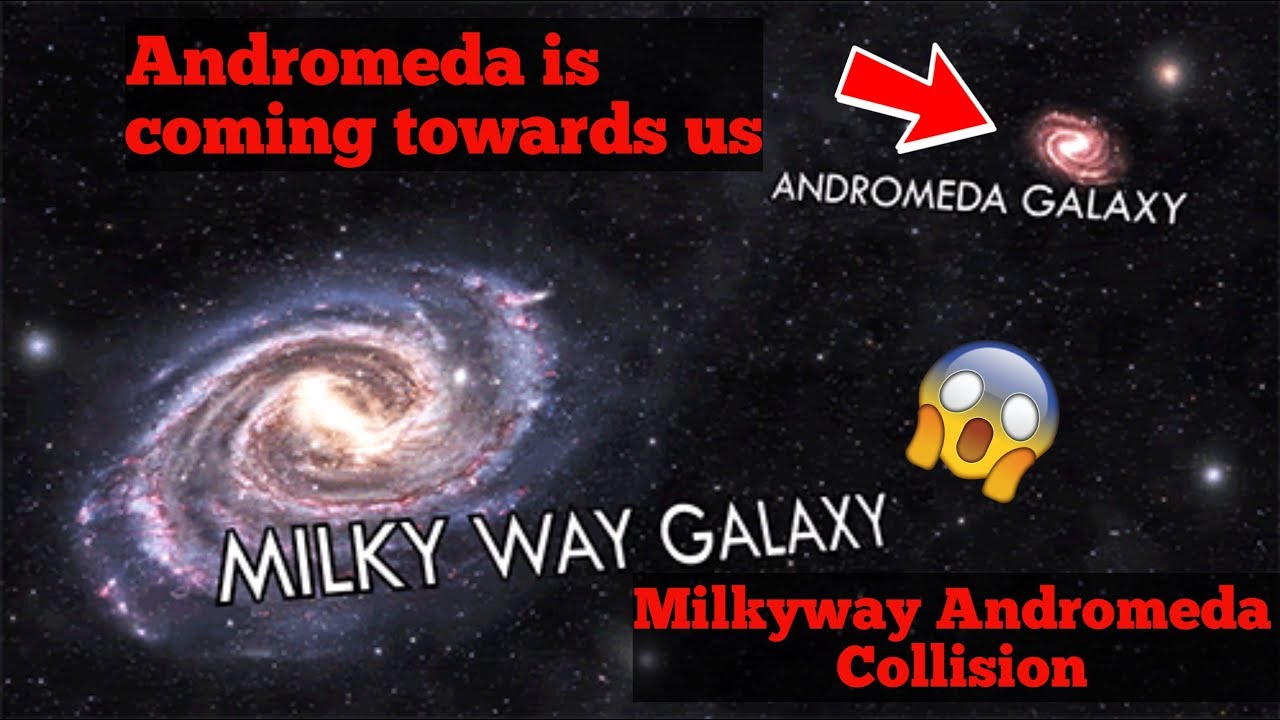
In about 4 billion years, our Milky Way galaxy will collide with the neighboring Andromeda galaxy. Don’t worry, though—the galaxies will just glancingly touch, not actually merge. Andromeda is on a collision course with the Milky Way because it’s being pulled toward us by our galaxy’s gravity. The Andromeda galaxy is about 2.5 million light-years away from us, and it’s approaching us at about 110 kilometers per second (70 miles per second). The collision between the two galaxies will be gradual, taking place over the course of several billion years. During the initial phases of the collision, the two galaxies will pass through each other, distorting their shapes as they do. Stars within the galaxies are unlikely to collide with each other, but the gas and dust within the galaxies will collide, causing new stars to form. Eventually, the two galaxies will settle into a new, single elliptical galaxy. Our Sun will probably be pulled toward the center of the new galaxy, but it’s unlikely that the Sun will actually collide with any other stars. The good news is that the Earth will probably survive the collision. Our Solar System is located on the outskirts of the Milky Way, about 27,000 light-years from the center of the galaxy, so it’s unlikely that the Sun will be pulled into the new elliptical galaxy. Even if the Sun is pulled into the new galaxy, it’s unlikely that the Earth will be pulled along with it, because the gravity of the other stars in the new galaxy will keep the Earth in its orbit around the Sun. So don’t worry—the collision between the Milky Way and Andromeda galaxies won’t affect life on Earth. In fact, it might even create some new and interesting star formations for us to observe.
Our planet and the Sun are both within reach of the Milky Way Galaxy, which contains several hundred billion stars, including our Sun. In the process of colliding and condensing, a massive sea of gas from the three neighboring galaxies forms, which is then transformed into a massive stream of new stars. It is thought that a collision of two galaxies has formed a vast cosmic triangle deep within the Universe. When stars begin to appear as tiny clouds of dust and gas in space, the term “galaxie” refers to a star or object in space. According to scientists, two galaxies collide in a space triangle formed by two colliding galaxies. It will be more than five billion years before the Andromeda galaxy collides with the Milky Way. Even though the merger will greatly alter the night sky over Earth, it is unlikely to have a significant impact on the solar system. This wave of starbirth appears to be extremely rare due to the triangle shape of the star formation depicted in the image.
If the two galaxies collide without planetary engineering, the Earth’s surface would be too hot for liquid water to exist at that time, ending all terrestrial life. The Sun gradually increases its luminosity.
The Milky Way and its nearest neighbor, the Andromeda Galaxy, are expected to collide around that time, and the sun is most likely to collapse into a white dwarf, possibly killing the Earth.
Will We Survive The Collision With Andromeda?
 Credit: YouTube
There is no guarantee that we will survive the collision with Andromeda, but it is worth noting that our galaxy has already collided with other galaxies in the past. For example, the Milky Way collided with the Small Magellanic Cloud about 2 billion years ago. Although these collisions can be violent, they also have the potential to create new stars and other astronomical phenomena.
The Milky Way and Andromeda Galaxy will be in direct contact in the near future. What would happen if the two largest galaxies ever collided? Astronomers are still experimenting with different shapes and sizes of galaxies in order to figure out what they will look like. Despite its size, the collision will result in a new, larger galaxy that will not spiral like our Milky Way. Such mergers, according to the authors of the study, should be observed in two equal parts by the LISA (Laser Interferometer Space Antenna) mission of the European Space Agency.
The two galaxies will merge approximately 4.5 billion years from now, and Voyager 1 will be long gone as a result. The spacecraft is currently approximately 54 billion kilometers from the center of the Milky Way.
It is currently 54 billion kilometers from the center of the Milky Way. At some point, it will drift into the Andromeda Galaxy, which is approximately 300 kilometers away from the Milky Way. Voyager 1 will have been on the Milky Way for 4.5 billion years by that time, when the two galaxies will have merged.
The Collision Of The Milky Way And Andromeda Galaxies
It is expected that the Milky Way and Andromeda galaxies will collide in about five billion years, making this event one of the most spectacular in history. According to research, the night sky will be greatly altered as the stars of both galaxies pass through the newly merged galactic center in new orbits. As the collision occurs right in front of us, the night sky will be completely changed by the impact. Both galaxies will lose their stars, and the Milky Way will have a sister galaxy.
Will Earth Be Destroyed When Andromeda Collides?
The answer to this question is currently unknown. Scientists have theorized that when the Andromeda galaxy collides with the Milky Way galaxy, it could potentially destroy Earth. However, they have not been able to confirm this theory and are still working to understand the full impact of the collision.
We’ll be four billion years from now when the Milky Way and Andromeda will collide. In reality, galaxies are unlikely to survive. The Earth’s surface will become too hot for liquid water to exist as soon as the two galaxies collide. What year will the earth turn into an ungovernable wasteland? From now on, we’re expecting this to occur between 1.5 billion and 4.5 billion years down the road. How long will humans last? According to the World Bank, there is a 95% chance humanity will become extinct in 7,800,000 years. Is there any other galaxy that can have a civilization like the one we have right now? The subject of speculation, hypothesis, and science fiction is currently limited to speculation and hypothesis.
In Which Galaxy Do We Survive?
 Credit: YouTube
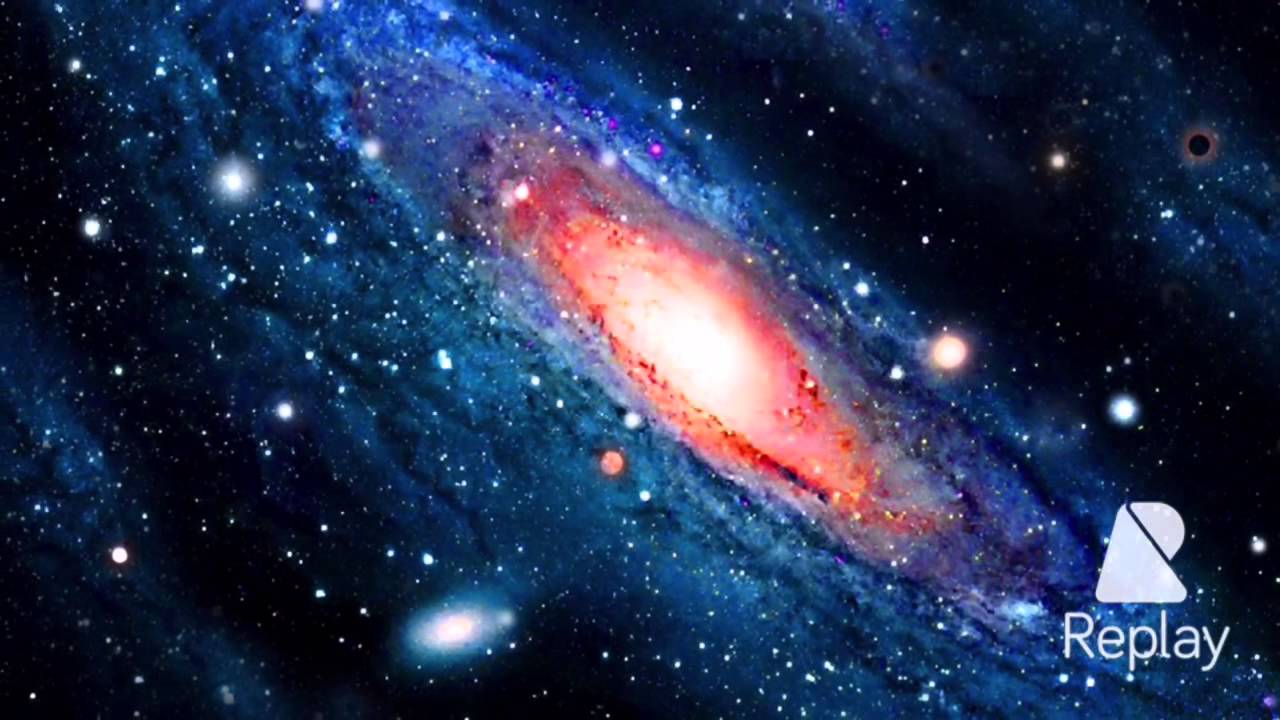
There isn’t just one galaxy we survive in, we survive in countless galaxies. Our galaxy, the Milky Way, is just one of many, many galaxies in the universe. In addition to the Milky Way, there are galaxies like the Andromeda Galaxy, the Triangulum Galaxy, and the Large Magellanic Cloud. There are billions of galaxies in the universe, and we are lucky enough to live in one of them.
What Will Happen When Milky Way And Andromeda Collide
 Credit: Lifeboat Foundation
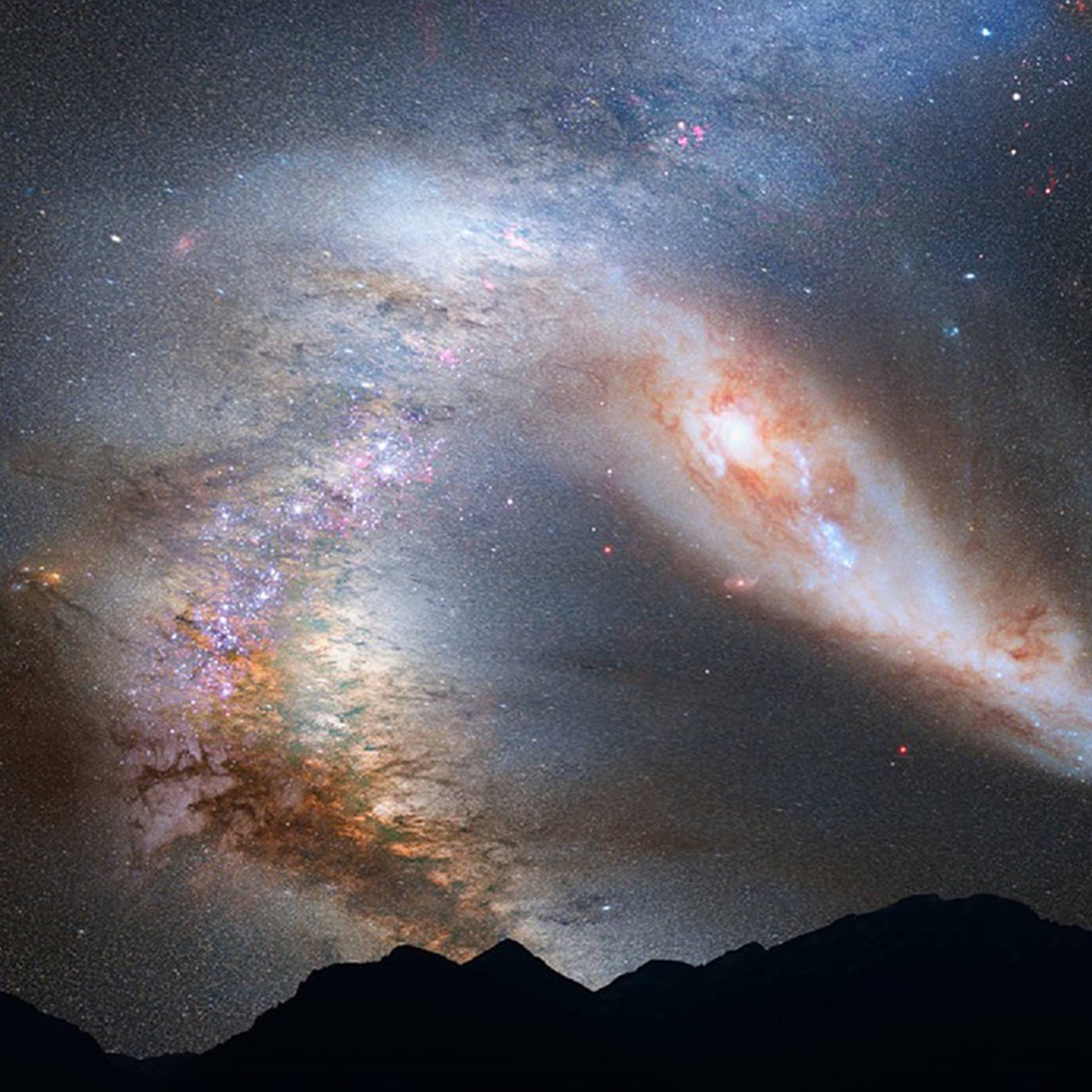
The Milky Way and Andromeda galaxies are on a collision course and will eventually merge to form a single, larger galaxy. The exact timing of the collision is unknown, but it is thought to happen in about 4 billion years. When the two galaxies collide, they will likely create a spectacular show of star formation as gas and dust is compressed and new stars are born. The resulting galaxy will be much larger and more massive than either the Milky Way or Andromeda galaxies are today.
Andromeda will likely collide with the Milky Way galaxy around five billion years from now. We know what the collision will look like in advance, and we can watch previews of other galaxy mergers in real time. If an eruption from the sun begins, we could have disastrous consequences for our electrical infrastructure. Marketers and businesses are increasingly using artificial intelligence (AI) to monitor customer behavior, and the field of emotion AI is rapidly expanding. According to John McQuaid, author of the book, bias reinforcement through emotion and AI reinforcement occurs as well. This year’s list of Top 10 Emerging Technologies features ten of the most promising emerging technologies.
The Oncoming Collision Of The Milky Way And Andromeda Galaxies
An estimated 4.5 billion years from now, the Milky Way Galaxy is said to have collided with Andromeda, and astronomers are still keeping an eye on the event to see if it will cause damage. There are more likely to be galaxy cannibals in our Milky Way, but Andromeda’s massive and complex stellar halo is more impressive. According to CNN, this event is unlikely to cause widespread destruction. Astronomers will gain new insights into galaxy interaction and how they interact with one another thanks to the collision, but they will also be able to observe it.
What Happens When Galaxies Collide
Supermassive black holes at the center of galaxies will eventually merge and become one massive black hole during a galactic collision. When two massive black holes collide, the two massive black holes produce gravitational waves that move out into space.
Galaxy collisions are some of the most spectacular events in the universe. There is no need to be concerned about galaxy collisions among galaxies in the same cluster. It is estimated that galaxies will be closer together for several hundred millions of years as a result of the gravitational attraction between them. Due to the extreme distances between stars, galaxy collidings do not result in collisions. When hydrogen gas clouds collide with one another in the galactic cosmic collision, countless stars form. This phase of star formation is known as the starburst phase because it is caused by gravitational tidal forces and collisions between nebulae at such a rapid rate. These gravitational waves are created when two supermassive black holes collide.
Two Galaxies On A Collision Course
In a study conducted with the Keck Observatory’s Laser Interferometer Gravitational-Wave Observatory (LIGO), two galaxies have already collided. They will merge in about 5 billion years, after the galaxies began their spiral journey around 12.8 billion years ago.
What would happen if a pair of galaxies collided?
The merging of two galaxies is predicted to occur in the future. In the peer-reviewed journal Astrophysical Journal, it was discovered that two galaxies have already collided.
On a planetary scale, there are thousands of stars and gas galaxies. As a result of the collision of two galaxies, their central supermassive black holes sink to the center of the newly formed galaxy, eventually merging. It is expected to be chaotic, but it is still an interesting spectacle to see.
Will Humans Survive Andromeda Collision
The Andromeda–Milky Way collision is a predicted galaxy collision between the Milky Way and the Andromeda Galaxy, which are thought to be on a collision course with one another. The galaxies are expected to collide in ~4.5 billion years and merge to form a giant elliptical galaxy. It is unknown if the Solar System will be destroyed during the collision, but it is unlikely given the vast distances involved. Even so, the collision will likely have profound effects on the Milky Way, including the triggering of star formation and the redistribution of matter and orbital angular momentum.
Andromeda, our spiraled neighbor, will collide with the Milky Way in the space between them. We will see the night sky appear to vanish as if nothing we have ever seen has ever existed in our lifetime. According to NASA, the merger will most likely leave the solar system unharmed. We don’t know what’s killing the Milky Way, but it’s dying. In about four billion years, the star-formation cycle will come to an end, a blink of an eye in the life cycle of the universe. The collision of Andromeda and the Milky Way will result in the formation of a new, larger galaxy. When Andromeda and the Milky Way collide, they will form a new super Galaxy.
When gases combine to create new stars, they become elliptical, globular, or irregularly shaped. It will no longer be a red giant star, but it will still be bright enough to burn up the surface of Earth at this point. According to some scientists, the Sun’s life cycle could end as soon as 5 billion years from now. Humans would generally be uncomfortable with the Earth being so long for them, but the environment would be viable in certain areas. The Canis Major Dwarf Galaxy, located 25,000 light years from the Sun, is the closest known galaxy to us.
Will The Milky Way Andromeda Collision Destroy Earth?
Furthermore, Andromeda has a much larger and more complex stellar halo than the Milky Way, implying that it has devoured many more galaxies, possibly larger ones. According to CNN, it is unlikely that this event will cause significant damage to our world.
The Importance Of An Intermediate-mass Black Hole.
The Milky Way and Andromeda galaxies are bound to collide, increasing the prominence of the black hole at the center of the Andromeda galaxy. While it is not as large as the black holes at the center of galaxies, it is still significant in its size and importance. This discovery provides an in-depth understanding of the structure and evolution of our galaxy.
Neighbouring Galaxies Collides
In neighbouring galaxies, the forces that hold them together are weaker than the forces that act on them from outside. As a result, they can be pulled apart by the gravity of other galaxies or clusters of galaxies. If two galaxies collide, they can be deformed by the impact or even merge to form a single galaxy.
It is one of the most inventive and mind-boggling phenomena in the universe. In the most recent image taken by the Gemini North Telescope in Hawaii, a merger in sparkling detail appears at the start of a new season. Gravity will be suffused by collisions between galaxies, causing them to fragment, resulting in the creation of new stars. Moiya McTier is an astrophysicist who studies the formation of hazy pockets of gas and dust that collapse beneath their own weight and ignite as new stars. Despite the fact that space will grow larger, most of the stars will not collide with anything else and will remain in their original orbits. Chiara Mingarelli studies how supermassive black holes are formed in the aftermath of the collision of galaxies. A newly formed galaxy’s center is surrounded by a single, larger black hole that eventually merges with the center.
Our Milky Way is being smashed by another spiral galaxy known as Andromeda. Our spiral arms will be the only ones that remain, and our supermassive black hole will also vanish. Mingarelli anticipates that the project will be completed in a matter of weeks.
The Andromeda And Milky Way Galaxies Are On A Collision Course
In the past, it has been widely assumed that the Andromeda galaxy will collide with our Milky Way galaxy. According to a Hubble study published in 2020, the two galaxies are currently colliding. Even though it is not imminent, it is estimated that the collision will occur within the next 4-5 billion years. In the past, however, the Milky Way and another galaxy known as the Triangulum Galaxy have collided.

