
The moon is Earth’s only natural satellite and orbits around our planet. Though it may seem like the moon is close, it is actually about 238,900 miles away. The moon is believed to have formed about 4.5 billion years ago and is thought to be the result of a giant collision between Earth and another planet-sized body. If the moon were to collide with Earth, it would be a catastrophic event for our planet. The moon is much smaller than Earth, but it is also much denser. This means that the impact would be incredibly destructive. The force of the collision would be so great that it would most likely shatter the moon into pieces. These pieces would then rain down on Earth, causing massive damage and potentially killing billions of people. In addition, the debris from the collision would block out the sun, causing a global climate change. Earth would become a much colder and darker place, making it difficult for life to survive.
According to the trailer for the upcoming movie, the moon is about to crash into Earth. Earth and the moon are held together by a gravitational field. As a result, because the moon is moving in a perpendicular direction to the gravitational force, the path of its orbit curves around the planet, keeping it from sinking into it. When a force pushes a moving object perpendicular to its momentum, the object moves in a circle with the force pointing towards the center. Because the moon is gravitationally linked to the Earth, it moves in a circular orbit. Both bodies are interacting with one another and orbit around a common center of mass. My simulation was based on the fact that I applied an infinite force of 50 times greater than the gravity force applied to the Earth one hour before.
The moon would take 28 days to orbit the Earth if I did this. Despite the fact that the push was made at the center of the Earth-moon system’s mass, it did not alter the system’s angular momentum. The new Star Wars trailer depicts an apocalyptic vision of the moon and the Earth colliding. To make the moon crash into Earth, a complete shutdown of its orbit would be required. Even though it is much larger than a rock on Earth, it is similar to a drop. Earth’s and the moon’s gravitational forces are much greater than those of the moon. If this were a giant 888-548-5870 battle, it would be the planet that prevailed.
Instead of pushing the water into a circle using a reference frame, I move it into a centrifugal force based on the reference frame of Earth. As a result, you must incorporate this force into an accelerating reference frame in order for physics rules to work. In this scenario, the Earth and moon would orbit their centers of mass in a circular orbit for only 2.3 hours rather than 28 days. A tide of this magnitude is only a one-in-a-million chance. These extreme tidal forces would also have a significant impact on mountains and buildings.
Can The Moon Wipe Out The Earth?
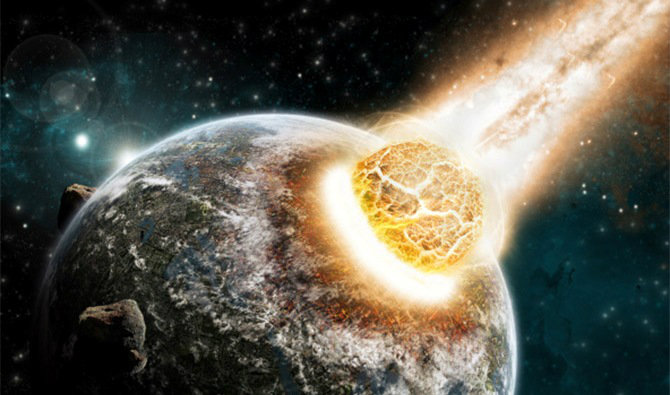
The moon is not big enough to wipe out the earth. The moon is only about 1/4 the size of the earth.
The Moon’s Importance To Earth
Without the moon’s gravitational pull, the Earth would gradually drift away from the sun, starving life on our planet. Climate change would eventually shift the Earth’s axis, resulting in wildly varying seasons and climates. Earth could potentially last only a few hundred thousand years if the moon is gone.
Could The Moon Crash Into Earth
Some scientists have theorized that the moon could crash into Earth, but it is very unlikely. The moon is slowly moving away from Earth, and it will continue to do so for billions of years. Even if the moon did start to move closer to Earth, it would take millions of years to actually collide. So, while it is possible that the moon could crash into Earth, it is very unlikely.
In his latest apocalyptic novel, director Roland Emmerich depicts the moon falling into the Earth’s shadow. How can a tiny object (say a tiny asteroid) cause the moon to revolve around its axis? For millions of years, the moon has served as a close companion for Earth. It is estimated to be 4.5 billion years old, which is the same age as Earth. Earth’s moon is about 385,000 kilometers away. It is estimated to have a mass of more than 81 million tons. The gravitational pull of Earth will produce an asteroid, comet, or other object traveling at its own speed. There have been no reports of such massive asteroids as yet.
Why Doesn’t The Moon Crash Into The Earth
Why does the Moon not fall into the Earth’s orbit like a tree? The reason for this is that the Moon never truly stops spinning. It constantly moves around us, so we must be on our guard. It would float away into space as it would with the Earth’s gravity.
It is defined as the interaction of objects with mass properties. The number of electrons, protons, and neutrons in an object determines its mass. When the moon is orbiting the Earth at a constant speed, it does not accelerate or decelerate. When the force is only sideways, the object does not accelerate or decelerate. Can an object be in the direction of the velocity at the same time? You can play a ball at the end of a string, or you can play a yo-yo with a string attached to it. As a result, the ball deviates from its original trajectory by swerving sideways.
If the moon were to circle perfectly, the gravitational force would only cause it to change its path. The Earth is 81 times more massive than the moon. In other words, it does not move in circles, but rather in much smaller circles.
The Gravitational Force Between Earth And The Moon
It is difficult to imagine that the moon and earth are not inextricably linked. If gravity is applied to the moon, the force it exerts will be insufficient to propel it towards us, like an apple falling from a tree. Because of this difference in velocity, the moon does not crash into Earth.
How Long Would It Take For The Moon To Hit Earth
If the moon were to suddenly fall out of the sky and head straight for Earth, it would take about 3.5 hours to reach us. However, in reality, the moon is slowly moving away from us at a rate of about 3.8 cm per year. So, it would take about 3.5 million years for the moon to finally crash into Earth.
Lunar Surface
The surface of the moon is covered in dust and rock. There is no atmosphere on the moon, which means that there is no wind or weather. The temperature on the surface of the moon can range from -233 degrees Celsius to 123 degrees Celsius.

