
Badminton is one of the most popular and fast-paced sports in the world, and having the right equipment is essential to playing it right. One of the most important pieces of equipment for any badminton player is the badminton racket, and a crucial part of having a successful badminton racket is having a properly tied badminton knot. A badminton knot is a particular type of knot used to secure the strings of a badminton racket and provide tension throughout the racket to ensure better performance. Tying the knot correctly can be a tricky process, so it’s important to learn how to do it properly. In this article, we will provide a step-by-step guide to tying a badminton knot that will ensure your racket is secure and ready for play.
What Is 4 Knot In Badminton?
4 knot in badminton is a phrase which refers to a situation where a badminton match is tied at 4 points each. This can happen in either singles or doubles matches, and is usually an indication that the match is likely to be an exciting and competitive contest as both players or teams are evenly matched. When a 4 knot situation arises, the players must continue to play until one side is able to break the tie. This is usually done by winning the next two consecutive rallies in the match. The 4 knot situation is an exciting moment for the players and spectators alike, as the outcome of the match hangs in the balance.
Badminton Stringing Tips
Increase string tension gradually over time. Avoid performing a sudden jump, such as raising your tension from 24 to 27 lbs. Professional players string their rackets above the recommended string tension on average, resulting in a string tension of more than 30 pounds.
The harder it is to control the direction and spin, the more stretched the string bed is. Off-center hits, in particular, require this technique because the strings stretch more on one side of the shuttlecock than on the other. By stringing at higher tension, a thicker string bed will develop. Change the tension on any string, thick or thin, to get a more controlled or power-relieving feel. Thin strings penetrate the cork tip of the shuttlecock slightly deeper during impact, resulting in better control. Because of the lower resistance produced by thin strings in the air, the racket can be swung a little faster.
It is critical to consider your level of play as well as the factors that influence string tension, such as power, durability, and cost, when selecting the correct string tension for your racket. For advanced players, it may be advantageous to use a string with a higher tension because it gives you more control over the tension. The tension range between 24 and 28 pounds is better suited for intermediate players because it provides a larger sweet spot and does not require restringing. While you may prefer thicker strings in order to hold tension longer and save money, those who prefer more durability may prefer thicker strings. Strings tension is influenced by preferences and playing styles, so it is critical that you experiment with different tensions and see which works best for you.
Finding The Perfect String Tension For Badminton Success
Badminton is a game that necessitates the use of a great deal of skill, technique, and strategy. A key aspect of playing well is finding the right string tension on your racquet. Most players prefer to play the strings at a depth of one millimeter, as opposed to one-third of a millimeter or less. If you channel more force into your strokes, you should raise the tension on your racket strings. For those who are new to tension, 22 – 23 lbs is a good starting point. Most players believe that low tension causes more power, while high tension causes more control. When the ball rebounded from the racket, the lower tension strings stretched even more, storing more energy and returning more energy when the ball hit the ground. A player with a normal level of tension should use 24-28 pounds of tension. Strings here are tight enough to have a good feel but also slack enough to make generating power in smashes and other shots efficient. This is a nice middle ground. Because the strings are thinner, the racket can be swung faster for more power, and there is less resistance generated by the air. However, as the differences are so small, many players are unable to detect them. Longer strings, on the other hand, are more durable and hold tension for a longer period of time, which can save you money in the long run. Choosing the right string tension for your badminton racquet can help you play your best game. It is critical for each player to experiment with various string tensions to find the best solution for their situation. A sunken depth of 1mm is a good place to start, and tension variations can be attempted from there. A string tension for badminton is ultimately determined by the style of player you are and how comfortable you feel with it.
How To String A Badminton Racket By Hand
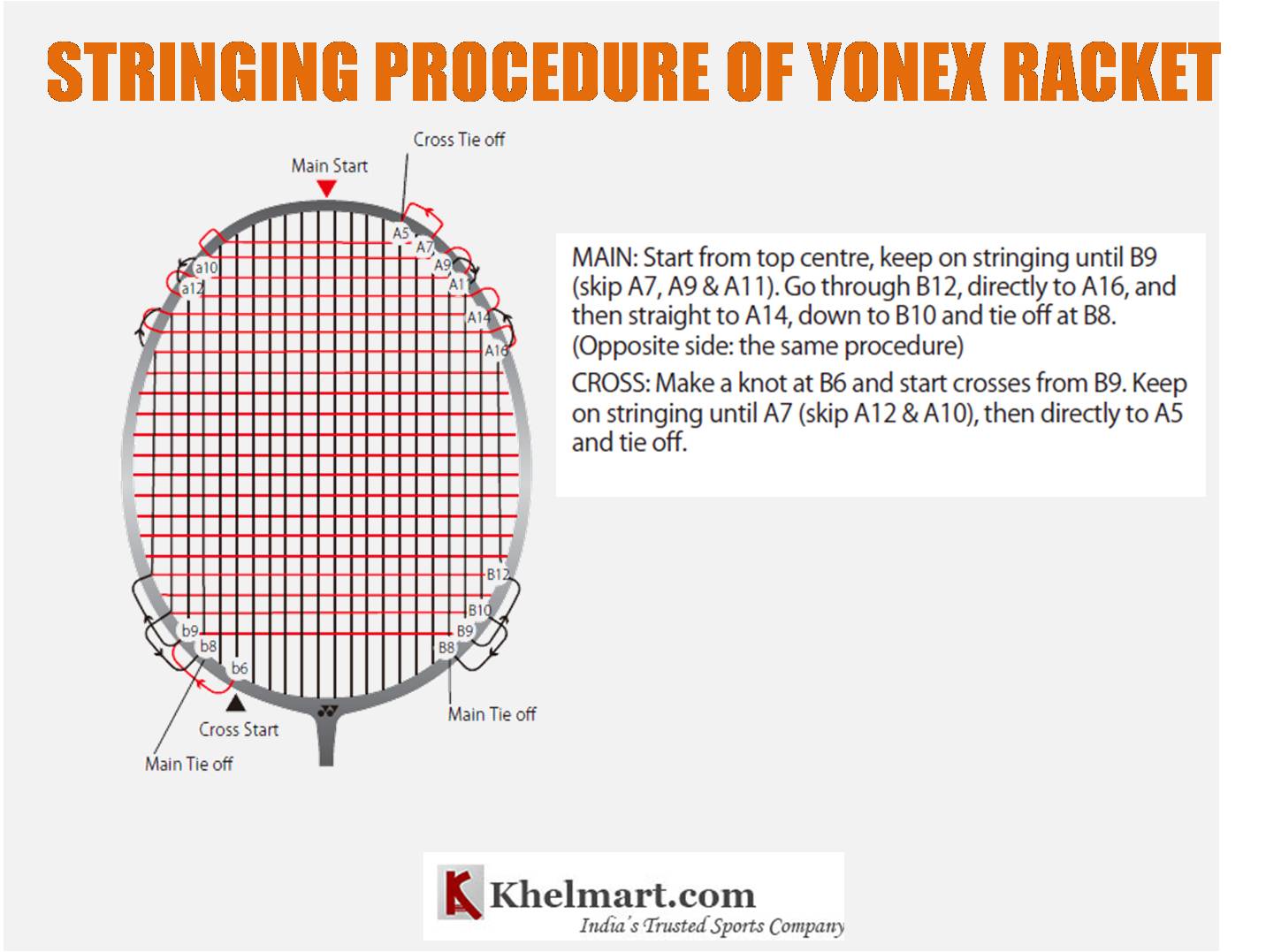
Stringing a badminton racket by hand is a relatively simple process that requires just a few basic tools. Firstly, you will need a stringing tool, which can be bought at most sporting goods stores. Secondly, you will need some badminton string, which is also available at most sporting goods stores. Thirdly, you will need a pair of pliers and a pair of scissors. Once you have all the necessary materials, start by threading one end of the string through the racket’s frame. Then, use the pliers to pull the string tight and knot it securely. Make sure the string is evenly spaced around the frame and then use the scissors to cut the excess string away. Finally, repeat the same process for the other end of the string and you will have successfully strung your badminton racket by hand!
In this article, we’ll show you how to restring a Badminton racket. Stringing a racket requires you to take into account a number of factors. For the most part, string tension ranges between 25 and 25 pounds for beginners. Stringing with a string that weighs more than 30 pounds is a favorite of some players. Ten metres of badminton string is sufficient to string one racket, but you may need to string multiple rackets to avoid becoming bored if you frequently play. Strings for badminton typically range in price from $3 to $8, while professional stringing typically costs between $15 and $20 per session. This is the type of all-around machine we recommend as a great all-around machine for all racket types at a reasonable price.
Restring To Improve Your Peak Performance
By stringing a badminton racket by hand, you can ensure that you are doing your best and are keeping your equipment in top condition. Restring your racket is worthwhile because it will help you maintain your performance and keep it sharp. To make your play easier, keep in mind to string your racquet in tension that is appropriate for you. Your racket restringing will ensure you are always at your peak performance.

