
Tying the Shaw Grigsby knot is an important skill to have when fishing with a lure or bait. This knot is a popular choice for anglers because it is easy to tie and creates a strong, reliable connection between the line and the lure. It also has a small profile, meaning it is less likely to get caught on weeds or debris. With the right technique and practice, anyone can learn to tie the Shaw Grigsby knot and take their fishing to the next level.
As a Bassmaster Elite Series player, I have an excellent understanding of this series. When fishing for bass, tying a good knot is essential, according to Shaw Grigsby. He employs a jig with a specific knot on one end and a different knot on the other to test knots. He prefers a double pitzen knot to the standard fluorocarbon line knot. He ties a knot known as the J Knot to a fluorocarbon leader’s main line of braid. He claims that with 12 turns of the improved clinch knot, the double uni-knot grips it far better.
What Is The Best Knot To Tie With Fluorocarbon Line?
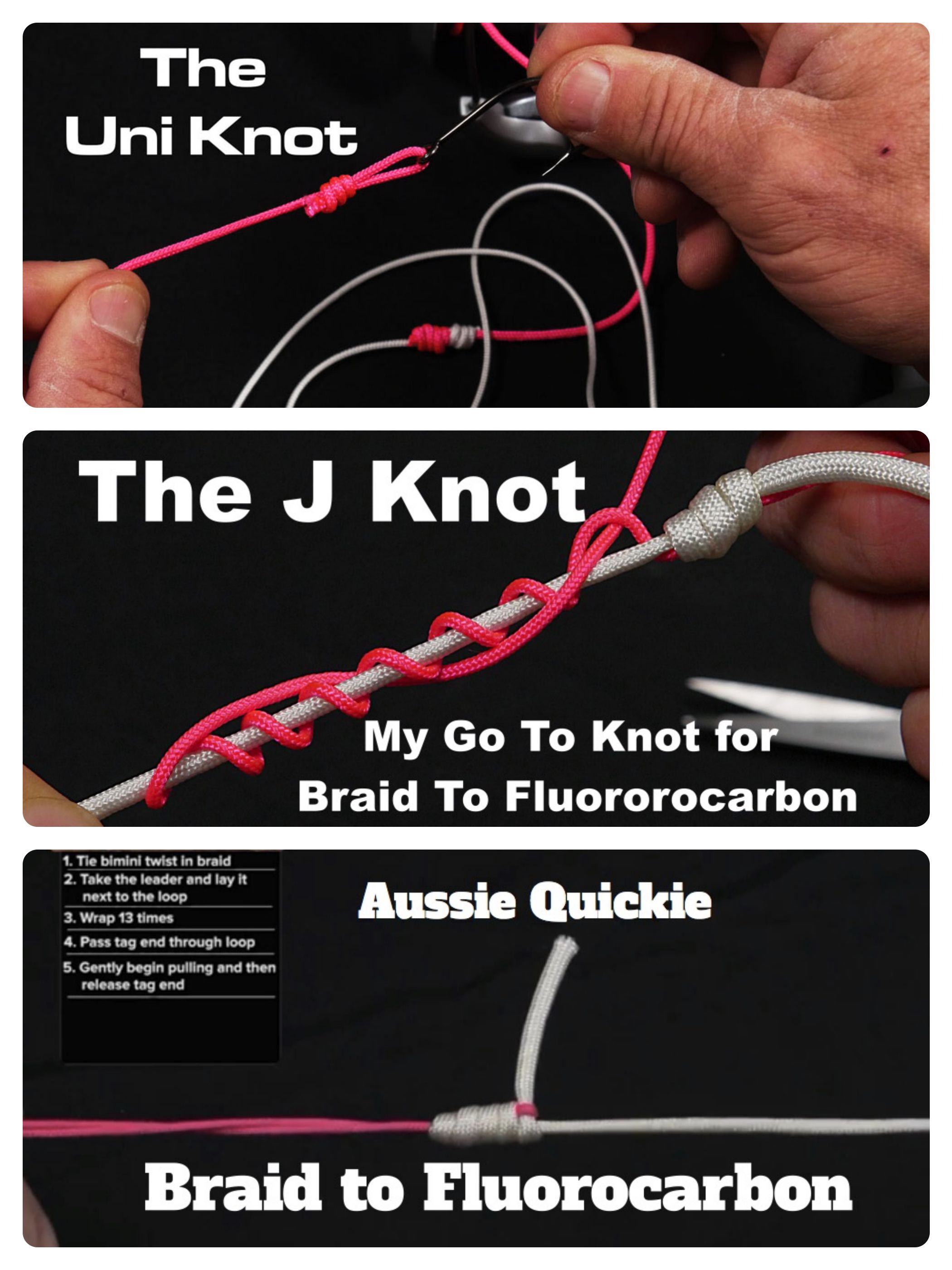
Which knot is the best forluorocarbon? The Tornado HH Knot is a good choice for Sunline. Because the knot strength of the Tornado HH knot is nearly 100 percent straight, we recommend it for use with fluorocarbon. There is no discernible difference in tensile strength between the knot and the line.
For the past eight years, I have never failed to tie a Palomar knot. Friction is usually to blame for the failure of pelmetron on flurocarbon. A knot that deforms or flattens the line in such a way that it fails in an instant will be doomed. When using mono or FC lines, it is critical to thoroughly wet the line before wrapping the knot tight. When fishing, the knot is the best you can tie under the conditions. For Floro to Braid, I use the Albright Modified/Alberto knot. Knots are frequently caused by failing to wetting the line before pulling it tight.
Braids and okformono do not need to be pinched, but flouro does. Make only two minor adjustments in order to stick with the Palomar. When the line is being run through the hook eye, keep it out of the way and then back through again. Pinching the line is acceptable for braiding and okformono, but it is unacceptable for flouro. However, these knots can be more time consuming and prone to failure if not properly executed on the water. When dealing with a knot, wetting the line and pulling the tag end is always a good idea. Jam knot fishing in San Diego is simple to tie using jigs and lures, and it works well without crossing the line for hooks and clips.
wetting the line and pulling the tag end, as well as adhering tightly to the knot, should always be done when tying a knot. In San Diego, it is simple to tie a jam knot with jigs and lures, and the Palomar works well when properly tied; however, hooks and clips are not required. It is possible to deform FC line by pinching the loop and running the line through a small hook eye. The majority of the time, the hook eye wire is damaged when the knot is twisted or damaged during contact with the hook eye wire. Trilene knot is a double loop clinch knot with improved clinch know. You must return to the end of the loop to reach the main line. Because the Trilene Knot does not waste as much tag end as the Palomar, Bobby Barack recommends braiding it.
You can use it if you wet the knot and slowly pull it tight. A Uni-Uni knot works under fishing conditions well because the FG knot is excellent for braiding to leader, difficult to tie properly, and difficult to tie when fishing. Braid should not be used with leaders for bass fishing, as it is best suited for heavy cover fishing. The palomar can be easily tied, quickly tied, dependable, and difficult to break.
The Palomar knot and the blood knot are two of the most popular fishing knots among anglers. The Palomar knot is a strong, relatively simple knot that is ideal for tying fishing lines to a hook, swivel, or lure. Braided fishing line should be used with this knot. The blood knot, also known as the barrel knot, is a fantastic knot that can be used to tie together two lines of similar diameter, such as sections of monofilament nylon. The two knots that anglers rely on for a secure connection between their fishing line and their tackle are extremely reliable. When you practice tying these knots, you’ll be able to do so in no time, so you can cast your line in no time.
The Clinch Knot: An Ideal Choice For Fluorocarbon Line
The Palomar Knot is one of the best knots for tying fluorocarbon line to monofilament. According to Berkley Knot Wars testing, it is extremely strong and easy to tie, and it retains 100% of the original strength of the line. The Trilene Knot (also known as the double-loop clinch knot) is another excellent choice, but the Clinch Knot is the more powerful knot for fluorocarbon fishing. It provides a knot strength of 95 percent and a line break strength of 95 percent. The Clinch Knot is a great option for anglers looking for a dependable and strong knot to use to tie fluorocarbon lines.
What Is The Hardest Fishing Knot To Tie?

The Palomar Knot is one of the most powerful fishing knots. This knot only requires three steps, which are extremely powerful and simple to use. Because there are very few twists and glitches in this knot, it is extremely difficult to break. Braided line and monofilament are the best materials to use in this application.
Fishing line has evolved dramatically in recent decades. Fishermen stand to gain from nylon monofilament, fluorocarbon, and so-called superline. There was no contest between the two, as one knot scored slightly higher but still prevailed. A 3-turn Seaguar knot broke with 66% failure rate, and a 4-turn Seaguar knot broke with 53% failure rate. To tie the Palomar knot on either side of a small intermediate barrel, we’ll use a small swivel. If you need a knot that will go through the rod guides, you can use a J knot. The best use of an Albright is when it is connected to a thicker line for a bite.
When the uni splice is subjected to 15- to 80-pound tests, it maintains its strength under strain. This connection works best when using monofilament or fluorocarbon. It was an all-star performance. Even I was surprised by some of the results. The nonslip loop knot is just barely outdistancing the Palomar knot by a whisker, at 83% compared to 82%. As a result, a regular eight-turn clinch knot is not strong enough to hold at all, with the knot slipping out and being untied by about 10 pounds of force. Several knots made with 14-pound FireLine to a Rapala did poorly on the percentage scale.
A successful and successful fishing experience necessitates the ability to tie a knot properly, which is essential for catching big ones. Despite the fact that a simple overhand knot appears simple, it can weaken your line by up to 50 percent. It is critical to practice tying knots until you are proficient in order not to lose your catch. The Palomar knot is widely regarded as the best terminal knot for braiding. If you’re having trouble tying the knot, take a fishing line long, a hook with the point cut off or buried into a cork, and practice until you can. After you finish the Palomar knot, you can practice other knots in order to get the most out of your fishing.
What Is The Easiest And Strongest Fishing Knot?
Hangman’s Knot Hangman is a great fish hook knot that you can use when attaching your line to your reel. To increase your speed, run your line through the eye twice. A circle should be formed as a result of this. Once you reach the loop, wrap the tag end around the double line six times.
What Fishing Knot Do Pros Use?
Most bass fishing applications are based on a Palomar Knot, which is likely the most commonly used knot. It can work with braid, fluorocarbon, and mono, three of the most common types of line. Furthermore, it retains a very high “knot strength” when it is properly executed.
Best Fluorocarbon Knot Shaw Grigsby
According to Grigsby, each line has a unique knot that works best for it. He describes the Double Pitzen knot as his favorite fluorocarbon line knot. He describes the knot as “unbefitting.” “You can tie it single, but tying it doubles your strength.”
The Pitzen Knot can be tied with a Shaw Grigsby Knot. To tighten the Eugene Knot 16/20 Knot, use a straight up clinch knot with plenty of lube. Clif Kincaid’s jam knot is an excellent choice for floro. For flouro, avoid using a palomar knot. Double Uni is a versatile knot that can be used to tie any type of line. I only use this knot for my work. Don’t call me Shirley, either.
The Ranger 521L C was purchased by Joe Marine in 2018, and the Ranger 521L Marine Ranger was purchased by Marine Specialties in May of this year. The Mercury PRO XS 250 V-8 Lew’s P-Line Pro is the most popular model. The Jimmy Boss Rod and Reel Service is available 24 hours a day, seven days a week. Lanier Lawn and Garden has been in business since 1982. FastBass Marine is one of the military support groups that we rely on.
Is The Seaguar Knot Strong?
The Seaguar Knot has demonstrated 97 percent knot strength in leader-to-tippet testing, making it an excellent choice for connection. It’s fairly quick to tie, and it’s awarded high marks on this count. You can make knot tying difficult if you work with low visibility lines.
What Knot Does Kevin Van Dam Use?
If you want to be a bass angler, you’ll have to know the knot because it’s the only one you need to master. For tackle applications, such as crankbait fishing, he uses a Palomar knot.

